Contractor Commercial Auto Insurance for NJ work trucks.
Pickup and van insurance for contractors, built around how the vehicle is actually used — ladder racks, trailers, employees driving to job sites, and the certificate demands your GCs put on the policy. The most common gap we see is personal auto on a work truck, and those policies exclude business use.
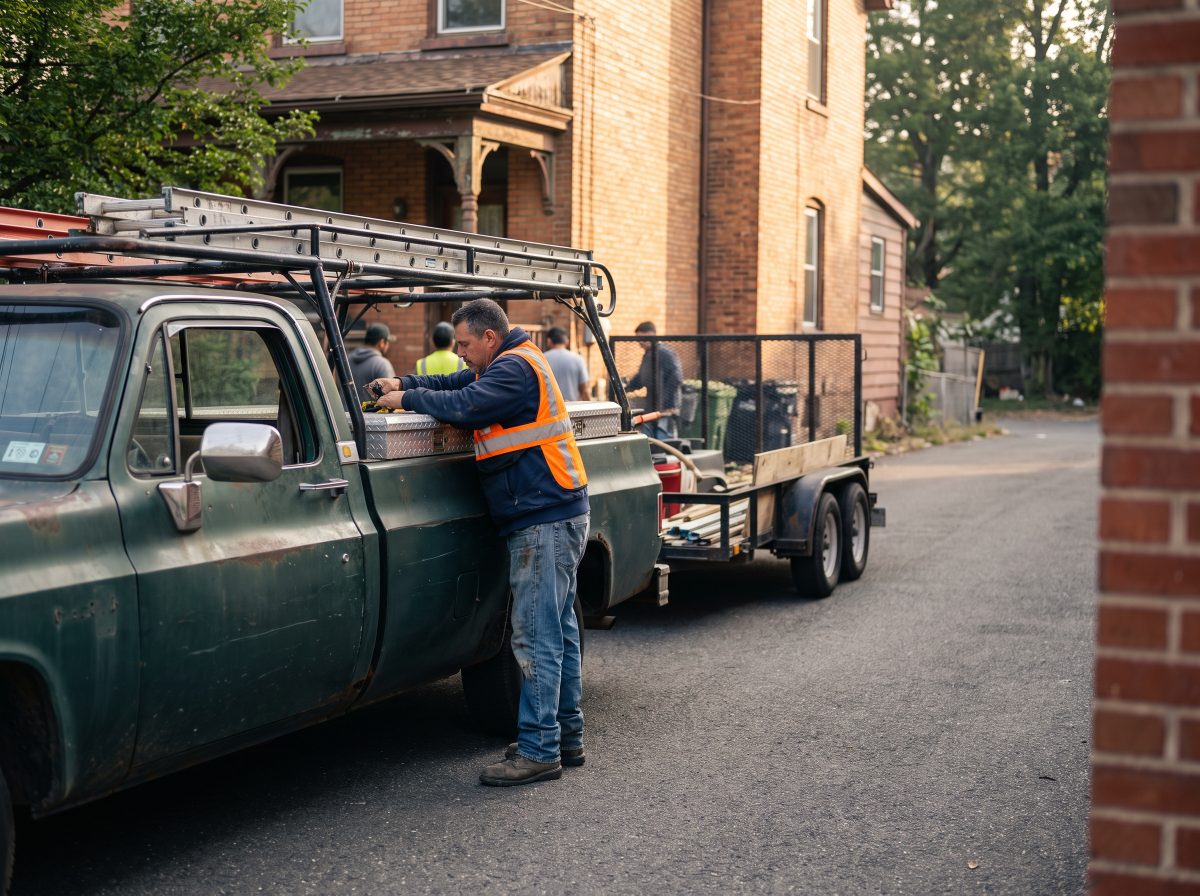
Why Personal Auto Doesn’t Cover Your Work Truck
Almost every personal auto policy contains a business-use exclusion. The contractor who uses their pickup for personal driving AND to haul tools to job sites is uninsured for any claim that arises during business use. The personal auto carrier denies; the contractor is personally exposed.
This catches contractors whose truck is titled to them personally but used for the business. Title and insurance are separate questions — a personally titled F-250 that runs material to a site every morning is a business vehicle for claim purposes. The fix is contractor commercial auto insurance in NJ: a policy written for how the truck is actually used, with the business listed correctly whether or not the title has been moved into the company yet.
What Contractor Vehicle Insurance Covers
- Liability — BI and PD to third parties. NJ statutory minimums are far below what a contractor needs; industry standard is $1M CSL, which also matches what GCs expect on certificates.
- Physical Damage (collision & comprehensive) — damage to your own truck or van. Required if you have a loan; worth carrying on any vehicle you couldn’t replace out of pocket.
- Medical Payments / PIP — NJ-required medical for driver and passengers.
- Uninsured / Underinsured Motorist — when the other driver has no insurance or insufficient insurance.
- Hired & Non-Owned Auto — covers rentals and employee-owned vehicles used for business. Critical if employees drive their own cars to job sites or run work errands.
Work Trucks, Trailers, and the Tools Inside
Work truck insurance in New Jersey is not a commodity. A pickup with a ladder rack, a dump body, a utility cap, or a trailer in tow underwrites differently than a plain sedan, and the policy needs to list what’s actually on the vehicle — racks and permanently attached equipment should be scheduled, not assumed.
One point contractors get wrong: auto physical damage covers the vehicle, not what’s riding in it. The tools in the cap, the compressor on the trailer, the material in the bed — none of that is auto coverage. That belongs on a tools & equipment (inland marine) policy, which follows the gear in transit and on the site. We quote the two together because the claims show up together.
Trailers need to be declared — liability for a trailer in tow usually extends from the pulling unit, but physical damage on the trailer itself has to be scheduled. And seasonal vehicles — the plow truck that runs four months a year, the trailer that only comes out in the summer — can often be written with seasonal or laid-up comprehensive-only treatment for the off months instead of full coverage year-round. Tell us the real usage pattern; the policy can match it.
Job-Site Driving, Employee Vehicles, and GC Certificates
Contractor vehicles live a harder life than commuter cars — mud and gravel on unfinished sites, backing around equipment and material piles, loading and unloading next to other trades. Rating should reflect real job-site use, and your loss history will.
Employees driving their own vehicles to job sites is the quiet exposure. If a tech runs to the supply house in their own car and hits someone, their personal policy can push back on business use — and the injured party’s attorney looks at your business next. Hired and non-owned auto for contractors closes that gap, and most carriers add it to the commercial auto policy for a modest charge.
Finally, the paperwork: GCs increasingly demand additional-insured status and certificates on your auto policy, not just your GL. Not every carrier will do it, and the ones that will handle it differently. We place auto with carriers that can issue the endorsements your contracts require, so the certificate request doesn’t stall the job.
Carrier Panel for NJ Contractor Auto
Travelers, Nationwide, The Hartford, Plymouth Rock, Geico, Foremost, Next, and Allstate. Each has a different appetite for contractor vehicles: some are comfortable with ladder racks, dump bodies, and trailers in tow; some want clean MVRs across every driver; some are fast on a single-truck operation and others fit a growing crew with several vehicles. We match to the carrier whose appetite fits your trucks, your drivers, and the rest of your coverage stack.
If Your Business IS the Vehicles
This page is for contractors whose trucks serve the trade — the vehicle gets you and your tools to the job. If your business is the vehicles themselves — a delivery fleet, a livery operation, a trucking operation, a business that would still exist without a jobsite — you’re better served by our sister site, njcommercialautoinsurance.com, which specialises in fleet-first operations. We’ll tell you honestly which side of that line you’re on if you’re not sure.
Contractors who buy this with us typically also buy:
General Liability
$1M/$2M with the AI + endorsement structure your GCs require.
Tools & Equipment
Tools in transit and on the job site — your auto policy doesn’t cover them.
Commercial Umbrella
Sits over auto + GL + EL. Match your underlying auto limits to $1M so the umbrella attaches cleanly.
Common questions.
My truck is titled to me personally, not the business — is that a problem?
Do I need commercial auto if I only use my truck part-time for the business?
Are my tools covered if they’re stolen out of my truck?
My employees drive their own cars to job sites — am I covered?
My GC wants to be additional insured on my auto policy — is that normal?
Get your auto quote — built around your trucks, not a generic radius assumption.
Travelers, Nationwide, The Hartford, Plymouth Rock, Geico, Foremost, and Next. Plus the harder placements when you need them.