NJ Contractor Builders Risk Insurance — coverage for the project itself.
Required on most commercial jobs and a lot of higher-end residential. We write it project-by-project or on an annual reporting form, whichever fits your work.
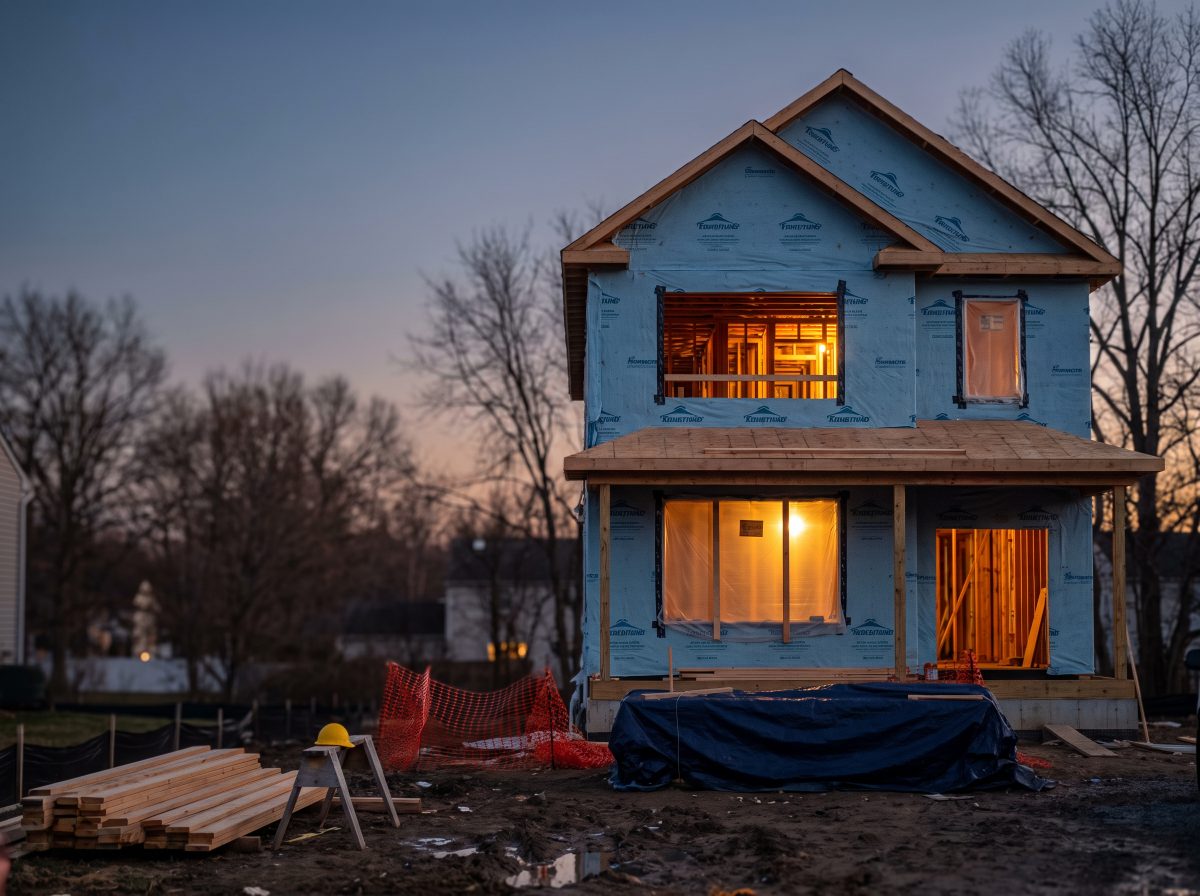
What Builders Risk Insurance Covers for NJ Contractors
The structure under construction — and depending on form, materials at the job site, materials in transit, and temporary structures (scaffolding, fences, trailers) related to the project.
Standard Builders Risk includes fire, lightning, wind (subject to deductible), theft, vandalism, weather damage, and accidental damage during construction. Optional coverages include earthquake, flood, soft costs (lost rents, additional financing costs), and extended period coverage past the planned completion date.
Who Buys It
Depends on the project structure. On most commercial jobs, the property owner buys Builders Risk (often required by their lender). Owners can see our sister site's guide to builder's risk for property owners. On residential remodel and addition work, the contractor often buys it because the homeowner’s policy excludes ongoing construction. Read the contract. Whoever’s named is the one whose carrier responds at claim time.
If you’re the GC and the owner is buying, you typically want to be named as an additional insured on their Builders Risk policy. If you’re buying, you typically want the owner named. Either way, the insurable interest and the claim party need to be aligned.
Project Policy vs. Annual Reporting Form
- Project policy — written for one specific project with a defined site, value, and term. Best for larger one-off projects ($500K+) and projects with unusual exposure.
- Annual reporting form — covers all your projects under a single annual policy. You report new projects as they start (or report monthly/quarterly totals depending on the form). Best for contractors running many smaller projects.
For a GC doing 6–10 residential additions per year, the annual reporting form is almost always cheaper and operationally simpler than 6–10 project policies. For a contractor doing one $4M commercial fit-out per year and a few small jobs, a project policy on the big one plus an annual reporting form for the rest is the right mix.
What Builders Risk Does NOT Cover
- Faulty workmanship — the policy covers damage to the structure, not your defective work. (Your GL handles third-party damage; defective work itself is generally a contractor problem.)
- Wear and tear, deterioration — standard exclusions.
- Earth movement and flood — typically excluded; available by endorsement.
- Mold — usually excluded unless added back by endorsement.
- Off-site materials — covered only if the policy form includes off-site coverage (most do, but with sublimits).
Contractors who buy this with us typically also buy:
General Liability
Builders Risk covers the project. GL covers third parties affected by it.
Tools & Equipment
Your tools and equipment used on the project — separate line from Builders Risk.
Commercial Umbrella
Sits over GL on bodily injury and property damage claims arising from the project.
Common questions.
Do I need Builders Risk if the homeowner is buying it?
What’s the typical premium?
What if the project goes longer than expected?
Are materials in transit covered?
Can you write Builders Risk on a renovation, or only new construction?
Builders Risk that fits how your projects flow.
Annual reporting forms for GCs running many smaller projects. Project policies for big one-offs. We’ll tell you which is cheaper for your year.