Tools & Equipment Insurance Most NJ Contractors Skip
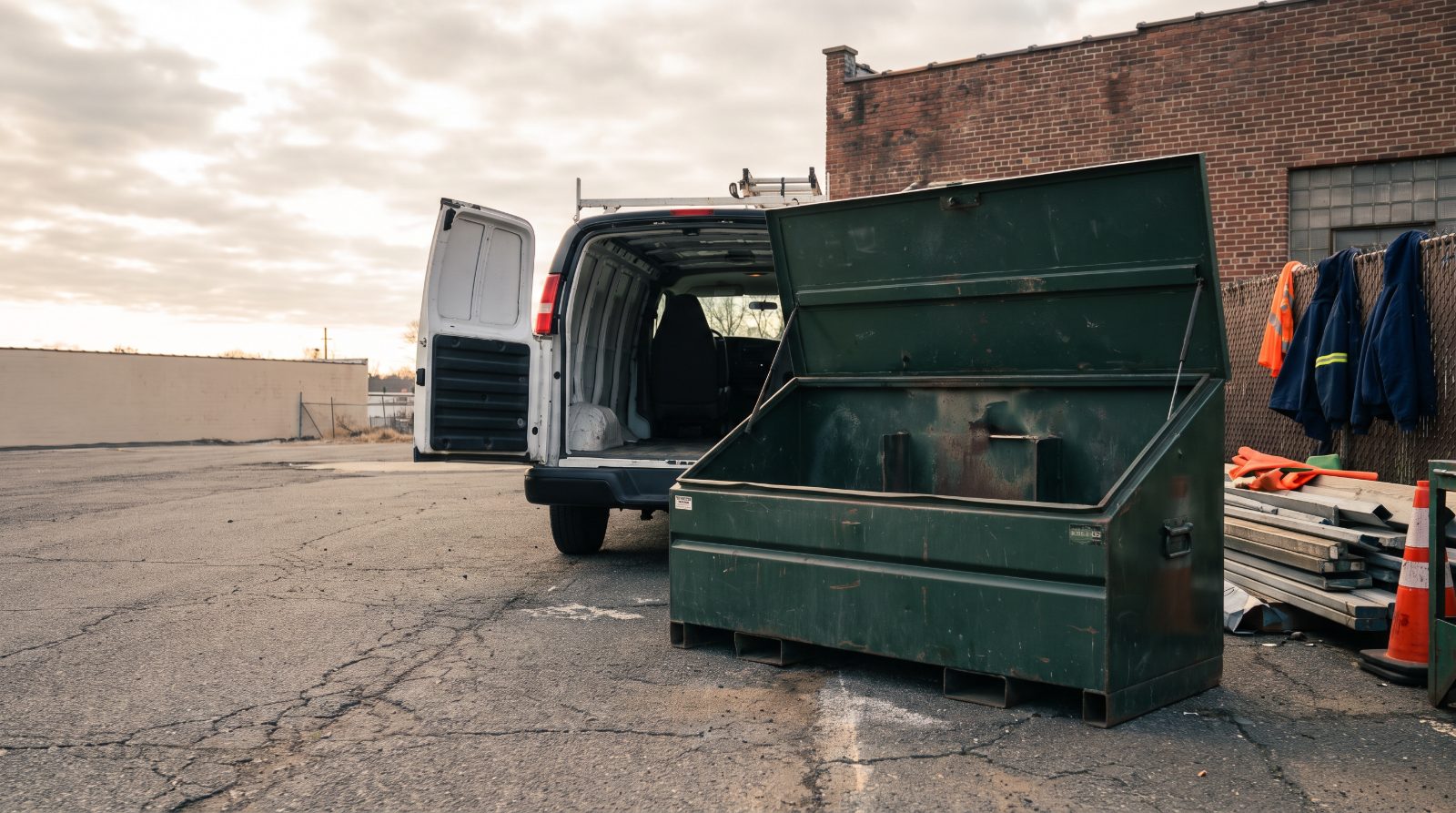
The most frequent loss a contractor actually experiences isn't a lawsuit. It's a truck emptied overnight — and standard policies don't cover it the way you think.
- General Liability covers damage you cause to others — never your own tools.
- Commercial Auto covers the vehicle, not the tools inside it.
- Contractors equipment is inland marine coverage, written scheduled, blanket, or both.
- Rented and leased equipment needs its own limit — the rental contract makes you liable for the full value.
The gap nobody notices until the truck is empty
Job-site and vehicle theft is the loss contractors experience most often. Not once in a career like a serious liability claim — repeatedly. Trailers taken from driveways, van locks popped overnight, a mini-excavator walked off an unfenced site over a weekend.
Here's the coverage reality:
- General Liability pays for bodily injury and property damage you cause to others. Your own property is never covered.
- Commercial Auto physical damage pays for the vehicle. Tools inside are contents, not the vehicle — excluded.
- Business Personal Property on a commercial property policy covers property at the described premises, with a small off-premises extension that won't come close to a loaded trailer.
- Homeowners excludes business property, and the small allowance most policies carry is meaningless for a working contractor.
The correct answer is a separate coverage line: contractors equipment, written on an inland marine form built for property that moves.
How the coverage is structured
Scheduled equipment lists each item over a threshold — usually $1,000 to $2,500 — by description, serial number and value. Larger machines belong here. Scheduling gets you the value you declared, and lets you write agreed-value terms on high-value units.
Blanket small tools covers everything under the scheduling threshold up to an aggregate limit, with a per-item sublimit. This is where the hand tools, saws, compressors, ladders and the endless accumulation of a working van live. Contractors chronically under-buy here: add up what's actually in one van and the number is usually $15,000–$40,000, not the $5,000 blanket on the policy.
Rented and leased equipment is a separate limit, and it matters more than most contractors realize. The rental agreement makes you responsible for the full replacement value of the machine — including, often, loss of rental income while it's out of service. Rent a $180,000 excavator with a $25,000 rented-equipment limit and you own the difference personally.
Employee tools can be added where your crew supplies their own. Without it, a theft that cleans out five guys' personal tools becomes a payroll and morale problem you pay for out of pocket anyway.
Terms that decide what you actually collect
- Replacement cost vs. actual cash value. ACV depreciates a five-year-old machine to a fraction of what a replacement costs. Replacement cost costs more and is almost always worth it on equipment you depend on.
- Deductible. Often $500 to $2,500. Set it against how frequently you actually lose small tools, not against the premium alone.
- Theft conditions. Some forms require forced entry, a locked enclosure, or exclude theft from an unattended vehicle overnight. Read this — it's where claims get denied.
- Coverage territory and transit. Confirm property is covered in transit, at job sites, and in storage — not just at your yard.
- Newly acquired equipment. Automatic coverage for a period after purchase, up to a limit, if you report it. Know the window; buying a machine and forgetting to schedule it is the second most common gap.
- Loss of use / rental reimbursement. Pays to rent a substitute while yours is repaired or replaced. On a single-machine operation this is the difference between a delay and a shutdown.
What it costs, and the honest comparison
Contractors equipment is typically rated as a percentage of insured value, and for most small NJ contractors it's one of the least expensive lines on the program — a fraction of what General Liability costs, for the loss you're most likely to actually have.
The comparison worth making: a contractor who loses a fully loaded van and trailer is looking at replacement cost in the tens of thousands, plus lost production while re-tooling. Weighed against an annual premium in the hundreds, the decision usually makes itself once the numbers are on the page.
Practical loss control that also lowers premium
- Keep a real inventory with serial numbers and photos. You cannot collect on what you can't document, and reconstructing a tool list after a theft always undercounts.
- Register serial numbers and use tracking tags on high-value items.
- Lock trailers with wheel locks and hitch locks; park vans against a wall or garage door overnight.
- Pull high-value tools from vehicles overnight where practical — several forms limit or exclude overnight vehicle theft.
- Fence and light job-site storage on longer projects; use ground anchors for machines left over weekends.
- Update the schedule when you buy and when you sell. Paying to insure sold machines while a new one sits unscheduled is a common and avoidable pattern.
See how we structure the coverage, or quote it alongside your GL and auto in one intake so the limits line up.
Frequently asked
Does General Liability cover my stolen tools?
Does my commercial auto policy cover tools in the van?
What's the difference between scheduled and blanket coverage?
Do I need coverage for rented equipment?
Should I buy replacement cost or actual cash value?
Want this sorted for your own operation? Quote your whole program in one intake — GL, Workers Comp, Commercial Auto, Tools & Equipment, Umbrella and Builders Risk — or talk to a producer. Reply within one business day.
This article is general information for NJ contractors, not legal or coverage advice. Your actual policy forms, endorsements, exclusions, and conditions control. For specifics, request a quote or call a producer.
More from the blog.
NJ Contractor Insurance Requirements — The Complete Guide
Workers Comp by statute, HIC contract requirements, common GC requirements, lender and public-work requirements — what NJ actually requires, in one place.
ComplianceWhat Your COI Actually Needs (and Why Most Subs Get It Wrong)
An ACORD 25 walkthrough: additional insured wording, primary & non-contributory, waiver of subrogation, 30-day notice — and the gaps subs keep sending GCs.
CoverageNJ Workers Comp for Contractors — Officers, Subs, and the State Fund
Officer coverage rules, sub WC certificates and audit exposure, the State Fund as residual market, and class-code and ex-mod basics.
Stop reading. Start quoting.
You know what you need. Quote your whole program — GL, WC, Auto, Tools, Umbrella, Builders Risk — in one 5–7 minute intake.