NJ Roofer Insurance — honest about the placement reality.
Roofing is one of the harder trades to place — fall exposure, height, weather, and claim severity all run higher. We’re built to handle the full range, including E&S for the harder accounts. We’re straight about what places where.
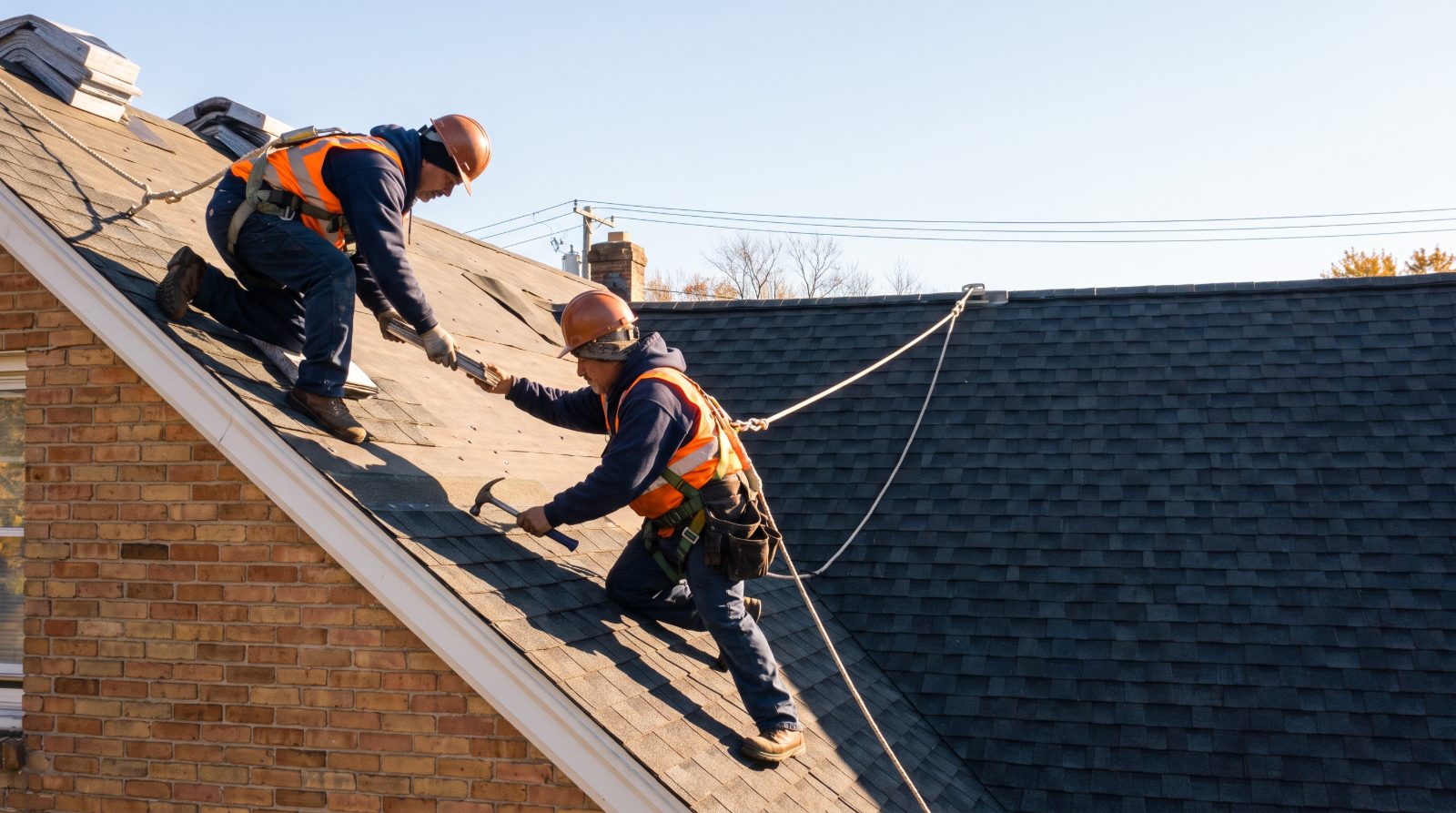
Who NJ Roofer Insurance Is For
NJ Roofer Insurance from NJ Contractors Insurance Center quotes General Liability, Workers Comp, Commercial Auto, Tools and Umbrella in one intake. Solo residential reroof operators through commercial roofing contractors doing flat-roof and built-up systems. Storm-chasers, shore-area roofers, and slate/metal specialists each have their own carrier appetite considerations.
The Placement Reality
Roofing has a harder placement reality than most trades and we’re not going to pretend otherwise. Standard markets that write NJ roofers include AmTrust and Cumberland Mutual for small-to-mid residential, Nationwide and Foremost for some operations, and Travelers/The Hartford for larger commercial roofing contractors with clean loss runs. For contractors with significant loss history, distressed operations, or shore-heavy work with hurricane/nor’easter exposure, the placement typically goes E&S. Pricing in the E&S market runs higher and conditions are stricter, but the markets exist and we use them.
We won’t waste your time pretending we can write your account in the standard market if we can’t.
What NJ Roofer Insurance Covers
- GL — $1M/$2M standard, but policy structure matters more than the limit. Products-completed operations exposure for roofing is severe (leaks discovered months/years after installation are routine claims). Confirm products-completed is included with adequate limits.
- Workers Comp — NJ roofing class codes are among the higher-rated in the contractor pool. Fall protection programs and documentation matter for the carrier underwriter and at audit.
- Commercial Auto — pickup trucks, dump trailers, occasional flatbeds for material delivery.
- Tools & Equipment — ladders, fall protection equipment, harnesses, nail guns, compressors, lifts.
- Commercial Umbrella — strongly recommended given severity exposure of falls and post-completion water damage.
- Builders Risk — if you’re the prime on a reroof project (often the property owner buys this, but you may need to arrange it).
NJ Roofer Insurance: NJ-Specific Considerations
- Storm-chasing operations (out-of-area roofers following hail/wind events) have a different carrier appetite than established local roofers. We write storm-chasers when they’re set up legitimately but the placement is typically E&S.
- Shore-area work (Atlantic, Cape May, Ocean, Monmouth counties) has hurricane/nor’easter exposure that affects carrier appetite.
- Solar/PV roofing cross-trades with electrical; some carriers exclude or sublimit PV.
- Commercial flat-roof and built-up systems have different exposure (membrane, hot-mop, torch-down) than pitched residential.
- Slate and metal — specialty trades within the roofing category; some carriers favor these as lower-frequency work.
Common questions.
I’ve had a couple of claims — can you still write me?
I’m a storm-chaser doing work after hail events — do you write that?
Shore work — am I uninsurable?
Solar installation — different conversation?
What about fall protection — does carrier underwriting care?
Get your quote — one intake, your whole program.
We’ll tell you straight which market your account routes to. Standard, harder standard, or E&S — no wasted weeks.